Course Syllabus
Please see the detailed syllabus in the "Files" section - this page does not provide all information needed for the course!
Course Description:
The course includes the study of selected evolutionary, ecological, morphological, physiological, and biochemical aspects of representative micro-organisms. The laboratory includes staining, microscopic examination and identification of microbes, prokaryotic ecology, aseptic technique and isolation of microbes, microbial growth media, control of microbial growth including antibiotic sensitivity testing, metabolism, genetics, taxonomy, protists, fungi, and/or selected exercises determined by your respective lab instructor. This course is intended for students in the disciplines of biology, nursing, health sciences or for those with an enthused interest in microbiology and its applications.
Student Learning Outcomes:
Upon successful completion of the course, students will be able to:
- Survey important "milestones" in the history of microbiology.
- Compare and contrast the structures and functions of macromolecules found as components of microbial agents/microorganisms.
- Compare and contrast different types of metabolism/metabolic pathways employed by different types of microbes.
- Compare and contrast different types of microbial agents and microorganisms with respect to morphology, physiology, and phylogeny.
- Integrate concepts of gene expression, natural selection, and evolution in the context of microbiological organisms.
- Demonstrate and operate a microscope to examine microscopic life including bacteria, protozoa, algae, fungi, etc.
- Differentiate bacterial cultures by using staining techniques.
- Compare the use of different types of microbial media for isolation and identification of bacteria and fungi.
- Classify unknown bacteria by performing metabolic tests.
- Incorporate aseptic/sterile techniques in all laboratory experiments.
- Compare and explain the effects of physical and chemical factors in controlling microbial growth and perform antibiotic sensitivity tests.
- Explain the role of bacteria in biofilm formation and nitrogen cycling as important aspects of prokaryotic ecology.
- Explain aspects of host non-specific and specific defenses against microbial pathogens.
Course Content:
- History and relevance of microbiology: early discoveries, impact on contemporary world
- Biological chemistry: organic molecules, functional groups, biological polymers
- Biological membranes: structure and function
- Eukaryotic cells: generalized structure and function
- Prokaryotic cells: specific structural features and their functions
- Taxonomy: outlines of taxonomic systems, modern bacterial taxonomy
- Metabolism: enzyme function, general features of metabolic pathways, bacterial metabolism
- Growth and control: mechanics and measurement of growth, environmental influences on growth, control of growth by physical and chemical agents.
- Fungi: life cycles, reproductive patterns, taxonomy; common diseases caused by fungi
- Protists: life cycles, taxonomy, common diseases caused by protists
- Viruses: structural features, genomic features, replicative cycle, lysogenic mode
- Genetics: structure and function of DNA, protein synthesis, regulation of gene expression, bacterial genetic recombination
- Genetic engineering: introduction to, rational for, and techniques of genetic engineering
- Health and disease: normal body microbiota, epidemiology, and etiology of communicable disease; history, identification, and treatment of selected communicable diseases
- Immunology: evolution and features of body defenses against disease, passive defenses, phagocytosis, antibody mediated immunity, cell mediated immunity
- Antimicrobial drugs: principles of antimicrobial pharmodynamics, mechanisms and usefulness of drug types
- Microbes in the environment: environmental impact of microbial activity; bioremediation
- Evolution: early cell types, relationships of bacteria and archaea to eukaryotic cells
- Use of microscopes
- Microscopic examination of bacteria: preparation of bacterial smears, staining
- Isolation of bacterial species
- Scientific measurements, the metric system and concepts of microbial size
- Eukaryotic microbes (protozoa, algae), fungi, helminths, and arthropod vectors
- Microbial metabolism: selected metabolic tests
- Microbial identification: taxonomy of unknown organisms
- Mechanisms of action of antibiotics/antimicrobials and antibiotic sensitivity testing
- Use of disinfectants, antiseptics, and UV irradiation for control of microbial growth
- Prokaryotic ecology including biofilms, nitrogen fixation, and the nitrogen cycle
Required Textbook for Lecture:
Great news: your textbook for this class is available for free online!
Microbiology from OpenStax, ISBN 1-947172-23-9
You have several options to obtain this book:
- View online (Links to an external site.) (Links to an external site.)
- View under Canvas Modules (Links to an internal site.)
- Download a PDF (Links to an external site.) (Links to an external site.)
- Download on iBooks (Links to an external site.) (Links to an external site.)
- Purchase or rent a low-cost hardcover/paperback version via JMU Bookstore (Links to an external site.) or Amazon (Links to an external site.) (free Kindle version available also)
You can use whichever formats you want. Web view is recommended -- the responsive design works seamlessly on any device.
Required Manual for BIO 245 Laboratory (Same for ALL Laboratory Sections)
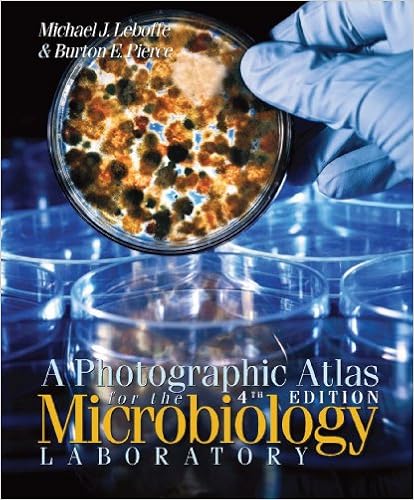
Title: A Photographic Atlas for the Microbiology Laboratory, 4th Edition
Authors: Michael J. Leboffe and Burton E. Pierce
Print ISBN: 9780895828729, 0895828723; eText ISBN: 9781617310072, 1617310077
- E-rental/Looseleaf Purchase Options: VitalSource (Links to an external site.) or JMU Bookstore (Links to an external site.) (Enter Student ID or BIO 245 Lab Section #)
- Additionally, you may utilize alternative purchase websites that may be more budget-friendly.
Important Notes:
- Any student needing accommodations should inform the instructor. Students with disabilities who may need accommodations for this class are encouraged to notify the instructor and contact ODS [link ] at your earliest convenience so that reasonable accommodations may be implemented as soon as possible. Students may contact the ODS via phone (Mon.-Thurs. 8am - 5pm or Fri. 8am -12pm) at (540) 568-6705 or via email disability-svcs@jmu.edu. All information will remain confidential. Currently, ODS office (Student Success Center Rm. 1202) is closed for face-to-face interactions, please check website for re-opening updates.
- Academic dishonesty and plagiarism will result in a failing grade on the assignment. Using someone else's ideas or phrasing and representing those ideas or phrasing as our own, either on purpose or through carelessness, is a serious offense known as plagiarism. "Ideas or phrasing" includes written or spoken material, from whole papers and paragraphs to sentences, and, indeed, phrases but it also includes statistics, lab results, art work, etc. Please see the JMU Honor Code and Student Handbook for policies regarding plagiarism, harassment, etc. [Honor Code; Handbook]